


Posture analysis

A person’s posture, the way he walks, stands and sits, speaks volumes to an experienced eye even before any proper massage session has started.
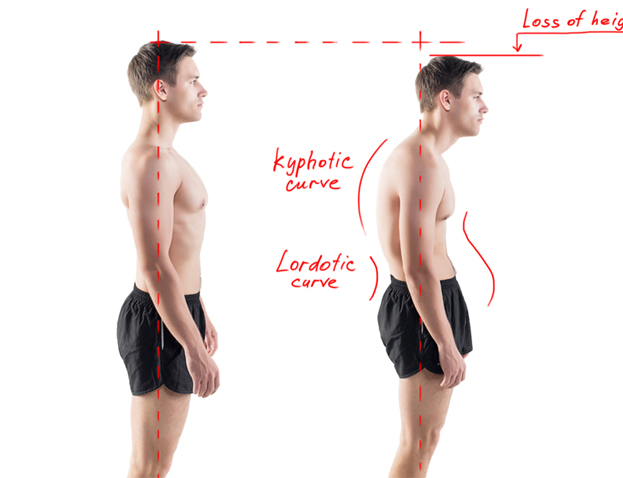
A natural posture shows immediately if there are any places of muscle strain or, on the contrary, if any muscles are too weak to support the body in a good form and shape. And the body whose posture is out of balance leads to a great deal of chronic aches, acute or dull pains, migraines and restricted range of motion. For example, a person with hunched up shoulders, who slightly slouches, is very likely to have stiff, tense muscles around the shoulders and neck, that will cause poor blood flow to the head, and that, in turn, will cause chronic headaches and fatigue.
In order to restore your musculoskeletal balance and get a better functioning body back, we have to step back and have a general look:
-
At the body alignment
-
looking for any tilts (in shoulder or hip)
-
any body asymmetries
-
the natural curve of the spine (slouching, lower back curving, neck
-
-
At the way the person moves — is he
-
guarding some body part, keeping them tense and moving with care
-
having problems with range of motion of limbs (stiff, awkward movement)
-
All this information will give your massage therapist the plan of action for any further treatment — whether he will work on release of tense muscles or strengthening of weak ones, invigorating, toning massage sessions or soothing and relaxing ones.
The well-balanced natural posture will set your in the well-balanced set of mind, relieve you from chronic aches and pains and will bring you a youthful healthy look.
Useful links:
WikiEducator. Postural analysis. http://wikieducator.org/Postural_Analysis